8th Conference on
Computational Thinking in Schools
The CTiS (Computational Thinking in Schools) conference is an annual event organised by the ACM India (Association for Computing Machinery, India) and the CSpathshala community. It aims to bring together teachers, educators and researchers to discuss innovations, best practices and issues pertaining to curriculum, pedagogy, policy and implementation, related to bringing computational thinking to schools.
CSpathshala is an ACM India initiative to bring a modern computing curriculum to Indian schools. In our National Education Policy 2020 and in many countries across the world, Computational Thinking (CT) has been identified as one of the essential subjects to be taught and a critical skill to be developed in children during the school years. It advances the notion that the Mathematics and Science behind Computer Science go far beyond the simple ability to use computers, and can be taught and discussed in schools even without the use of computers. The first CTiS conference was held in Pune in April 2019 and the current CTiS2026 is the eighth edition. All Eight editions were highly successful and were well received by teachers and educators.
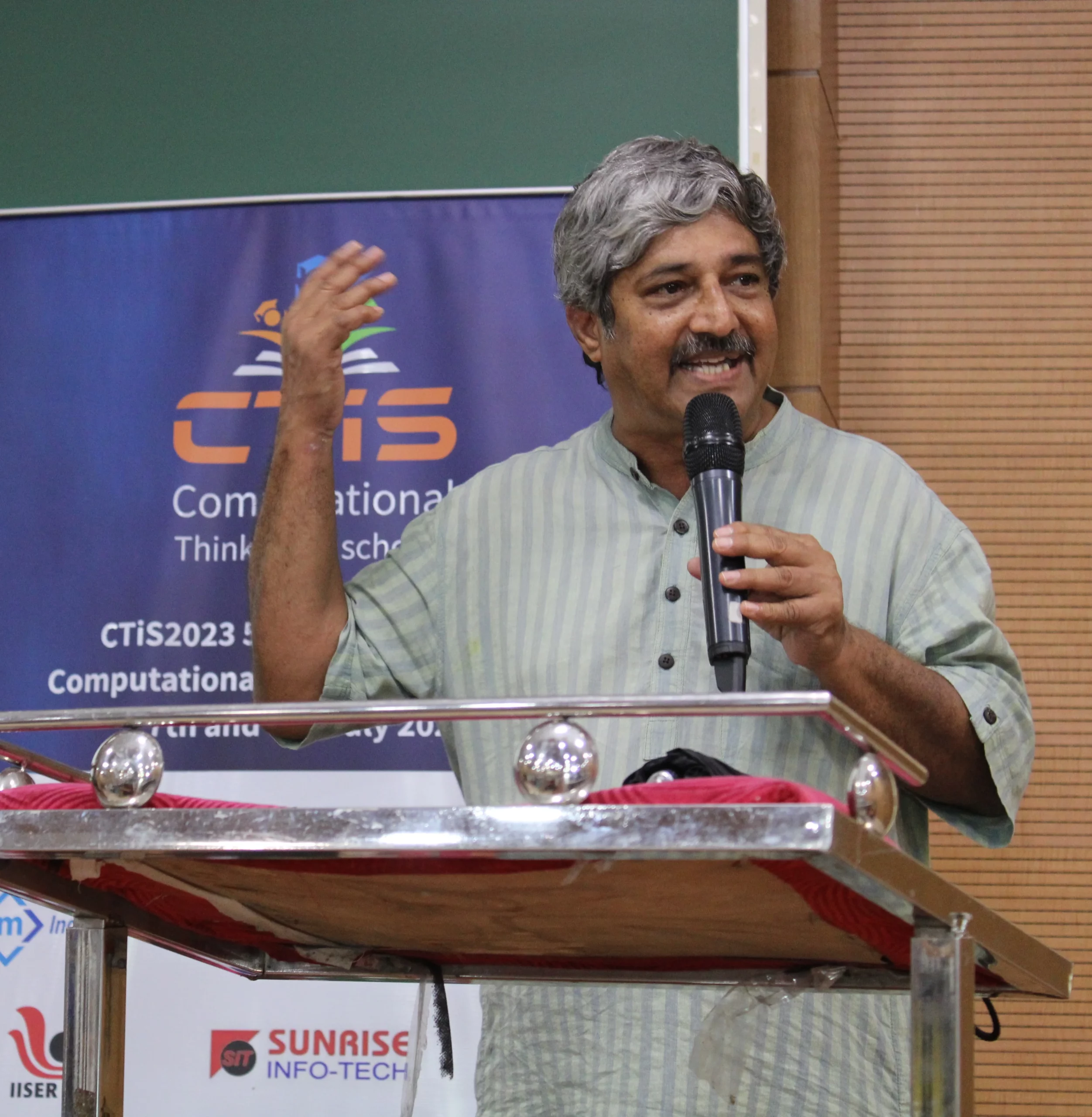
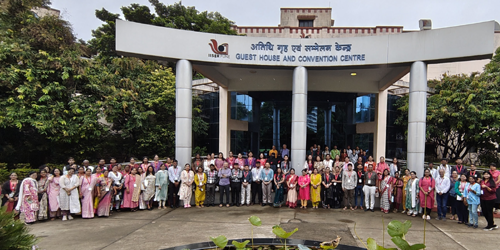
The Eighth Conference on Computational Thinking in Schools (CTiS 2026) was successfully held from 30 July to 1 August 2026 at IISER Pune. Organised by ACM India Council and CSpathshala, an ACM India education initiative, the conference brought together educators, researchers, school leaders, teacher educators and organisations engaged in school-level computing education from across the country. The conference was hosted with the support of SCTR’s PICT ACM Student Chapter and PICT Model School. Ekatra was also associated with the organisation and support of the conference.
CTiS2026 witnessed an overwhelming response, attracting 200+ participants from schools, higher education institutions, educational organisations, industry and teacher networks across 20 states in India with 800+ teachers joining the conference online. More than 400 abstracts were received from educators representing 16 states, of which 62 were selected for presentations, posters and demonstrations following a rigorous review process. The selected contributions covered Computational Thinking (CT), coding, Artificial Intelligence (AI), physical computing, mathematics, science, language education, inclusive education, teacher professional development and unplugged classroom activities.
A major highlight of the conference was a panel discussion on the CBSE curriculum for Computational Thinking and Artificial Intelligence in schools. The distinguished panel included experts from IIT Madras, Azim Premji University, TCS Research and leading schools, and was chaired by Prof. Madhavan Mukund, Director of Chennai Mathematical Institute. The discussion focused on the progression of Computational Thinking and AI education across school grades, the need for sustained teacher support, age-appropriate curriculum design, assessment practices that promote problem-solving, and the responsible use of AI by students.
The conference featured teacher presentations showcasing innovative classroom practices, integration of Computational Thinking across subjects, physical computing projects, AI-based learning activities and inclusive educational approaches. Participants explored how CT can support learning through games, storytelling, mathematics, scientific inquiry, robotics, environmental studies and community-based problem-solving.
Another key attraction was the keynote address, “More Than Code: Computational Thinking as a Habit of Mind,” delivered by Dr. Aman Yadav, Lappan-Phillips Professor of Computing Education at Michigan State University, USA. Dr. Yadav emphasized Computational Thinking as a powerful approach to problem-solving and reflective thinking that extends beyond coding and is increasingly relevant in the age of Artificial Intelligence.
The three-day programme also included poster and demonstration sessions, hands-on workshops, and presentations by educational organisations. Workshops explored innovative approaches such as learning CT through playground activities, collaborative games, robotics and project-based learning, enabling participants to experience practical and engaging methods of teaching Computational Thinking. The conference featured two parallel hands-on workshops: “From Classroom to Playground: Computational Thinking in Open Spaces,” facilitated by Anuya Trivedi, Founder and Director of the Green Buddies Foundation, and “Sense, Think, Act: Turning Problems into Opportunities through e-Yantra,” conducted by Deepa Avudiappan, Sri Lakshmi and Vineetha V. J. from the e-Yantra team. These workshops provided participants with practical and engaging approaches to teaching Computational Thinking through play, robotics, project-based learning and real-world problem-solving.
The ACM India institutional sponsors for CTiS2026 were Google and Infosys as Platinum Tier Partners and Ola Electric as a Gold Tier Partner. The CTiS2026 conference sponsors were Microsoft, Sunrise Info-Tech and Sakal Newspaper in Education. Their support contributed significantly to the successful organisation and conduct of the conference.
CTiS concluded with reflections on the growing importance of Computational Thinking and AI education in schools and the need for continued collaboration among educators, researchers and institutions. The conference provided a valuable national platform for sharing classroom innovations, discussing emerging developments and strengthening the Computational Thinking education community in India.
Organiser

Partners



CTiS Partners
Gold Tier Partners

Silver Tier Partners

Academic Partner

ACM India Institutional Partners
Platinum Tier Partners




Gold Tier Partners

Silver Tier Partners

 cspathshala@gmail.com